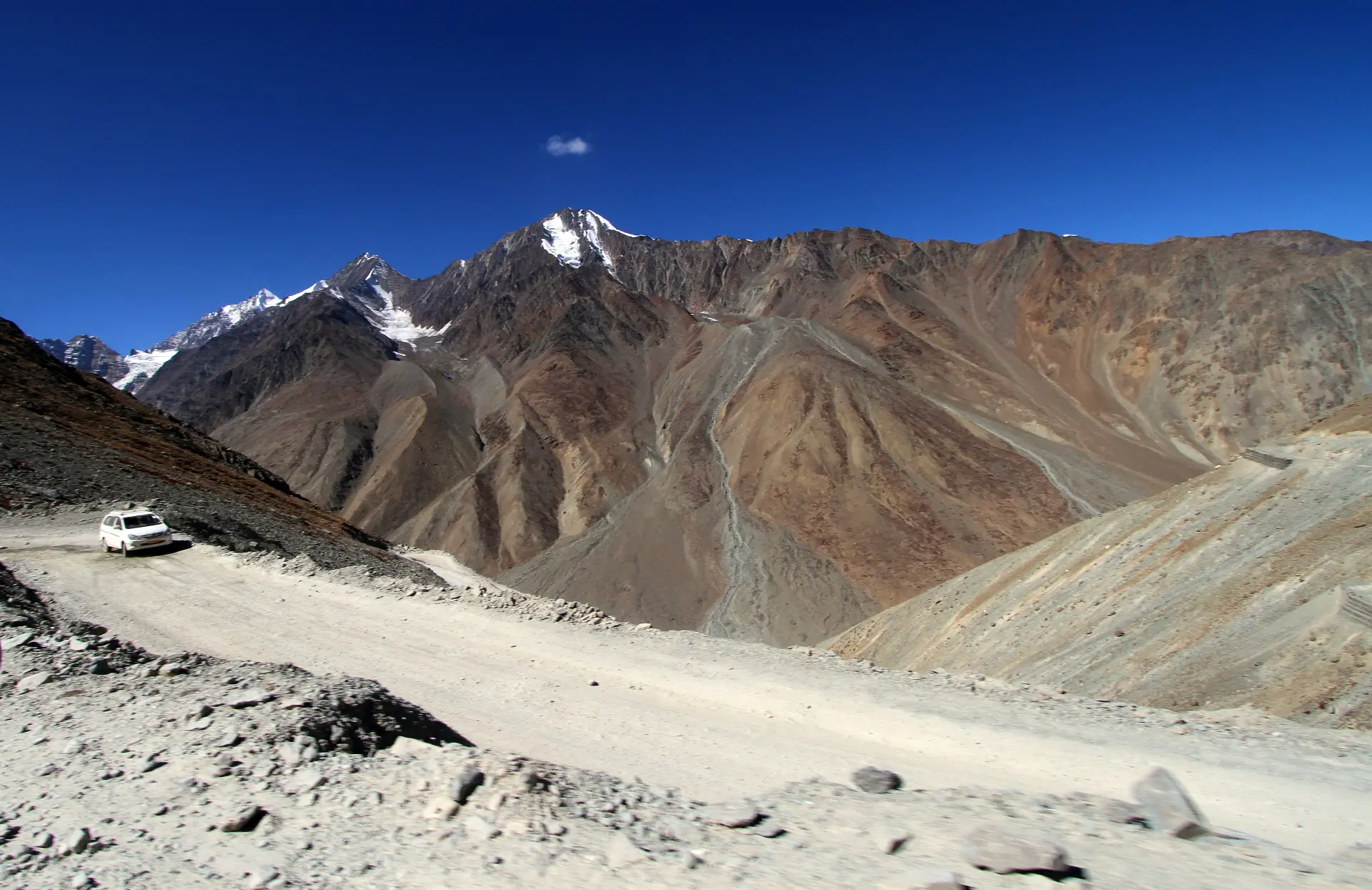

Spiti Valley Circuit
Chandigarh → Shimla → Sangla → Chitkul → Kalpa → Nako → Tabo → Dhankar → Kaza → Chandratal → Kunzum Pass → Manali → Chandigarh
On Request

Apple orchards, the Sangla Valley and Kinner Kailash views
Kinnaur is the district that lies between Shimla and Spiti, and for many travellers it turns out to be the surprise of the trip. The old Hindustan–Tibet road follows the Sutlej river through a deep gorge, with cliffs overhead and the river roaring below, before opening into side valleys full of apple orchards, wooden temples and stone-and-timber villages.
The Sangla Valley, along the Baspa river, is the greenest part of Kinnaur. Sangla town is a good base, the nearby Kamru Fort offers a glimpse of old Kinnauri architecture, and the road ends at Chitkul, at around 3,450 metres, one of the last inhabited villages before the Tibet border. Its meadows, river and wooden houses make it one of the prettiest spots in Himachal.
Further along the Sutlej, Reckong Peo is the district headquarters and Kalpa sits above it at roughly 2,900 metres. From Kalpa the view across to the Kinner Kailash range, including the rock pillar revered as a form of Shiva, is unforgettable at sunrise. The village of Roghi and its cliff-edge road lie a short drive away. Lower down, Sarahan is home to the Bhimakali Temple, a richly carved shrine in traditional style.
Beyond Reckong Peo, the landscape becomes drier and more Tibetan in feel as you approach Nako, with its small lake and old monastery, and the border with Spiti at Sumdo.
Road access matters here. The Shimla–Kinnaur side stays open for much of the year, subject to snow and landslides, while the route onward into Spiti from the Manali side over the Kunzum Pass opens only in summer. Kinnaur is therefore the natural gateway for winter and shoulder-season trips to Spiti. Our Kinnaur–Spiti tour spends three nights here, and the shorter Spiti Circuit includes two.
Summer (April–June): Pleasant weather, blossoming orchards in spring and green valleys. A great time for Sangla and Chitkul.
Monsoon (July–September): Kinnaur gets less rain than lower Himachal, but the highway along the Sutlej is prone to landslides and rockfall. Travel is usually possible with buffer days and an experienced driver. Apple harvest begins towards late summer.
Autumn (September–October): Often the best season. Apple picking is in full swing, the skies are clear and the Kinner Kailash range looks magnificent from Kalpa.
Winter (November–March): Very cold, with heavy snow in the upper villages. Chitkul and parts of the Sangla Valley can be cut off, and many stays close. The main highway is kept open where possible but can close after snowfall.
By air: Chandigarh is the most practical airport, with good flights from Pune and Mumbai. From Chandigarh, drive to Shimla and break the journey there.
By train: Kalka is the nearest broad-gauge railhead, and Shimla can be reached by the toy train or by road.
By road: Kinnaur is reached on the highway from Shimla through Narkanda and Rampur. Sarahan is roughly 170 km from Shimla, and Reckong Peo is roughly 230 km, around 8–9 hours. Sangla and Chitkul are reached by a side road from Karcham. Long stretches are narrow and cut into cliffs, so we recommend an experienced hill driver and daylight travel only.
Most travellers spend a night in Shimla or Narkanda on the way in, which breaks the long drive and helps the body adjust gradually before the higher villages.

Around 25 km from Sangla
A wooden-house village at the head of the Sangla Valley, close to the Tibet border.

About 7–8 km above Reckong Peo
A hillside village of orchards and old temples facing the Kinner Kailash range.

Around 170 km from Shimla
A beautifully carved temple complex in traditional Himachali style, dedicated to the goddess Bhimakali.

About 2 km from Sangla
A tower-style fort and temple above Sangla, reached by a short uphill walk through the village.
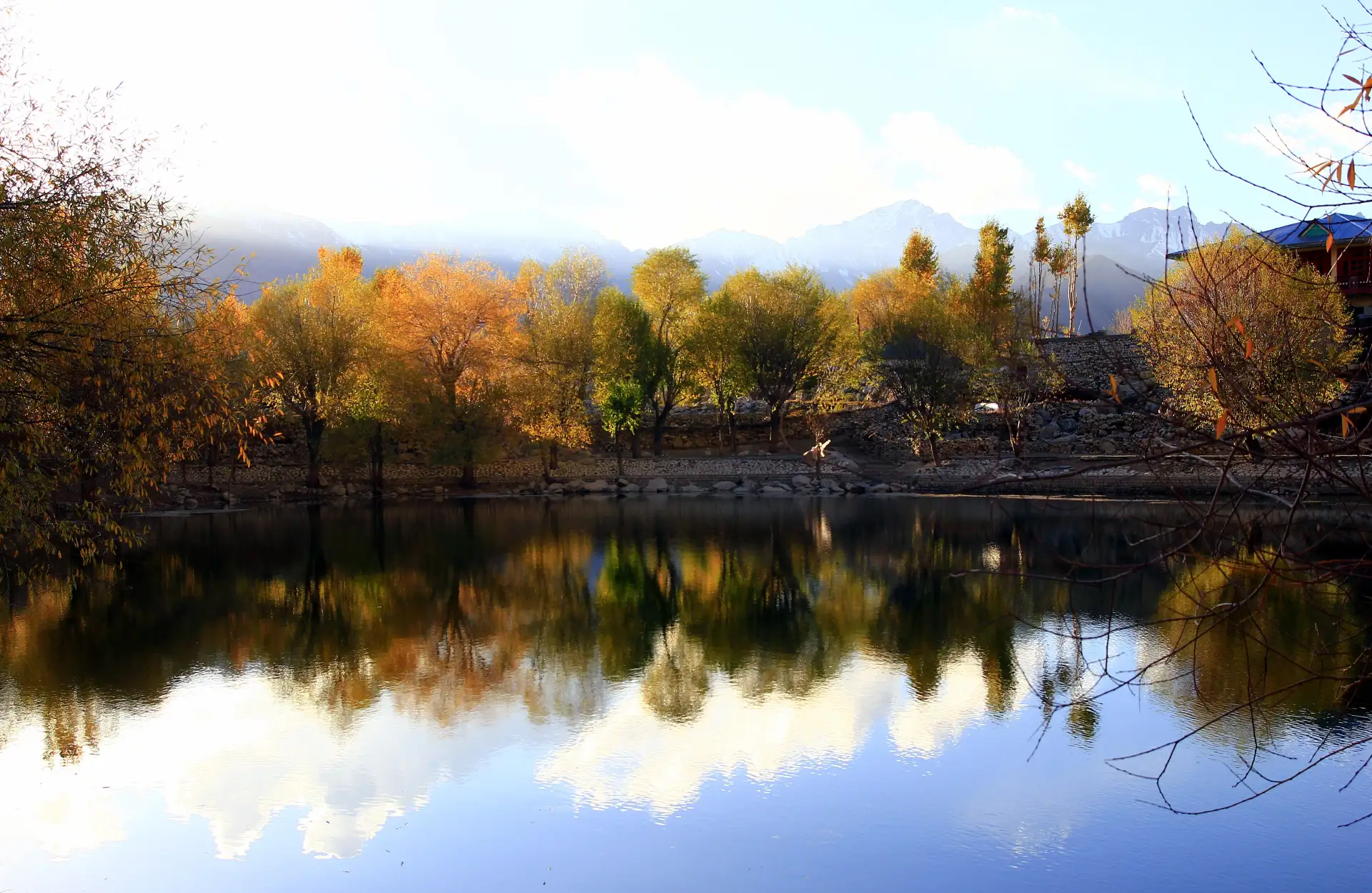
Around 100 km from Reckong Peo
A high village with a small lake and monastery, the last major stop before Spiti.

Around Kalpa and Sangla
Walk through apple orchards in late summer or autumn and taste fruit straight from the trees.
Chandigarh → Shimla → Sangla → Chitkul → Kalpa → Nako → Tabo → Dhankar → Kaza → Chandratal → Kunzum Pass → Manali → Chandigarh
Chandigarh → Shimla → Sangla → Chitkul → Kalpa → Nako → Tabo → Dhankar → Kaza → Chandratal → Kunzum Pass → Manali → Chandigarh
Multi-day jeep safaris through the high deserts of Spiti and Ladakh, crossing high passes to monasteries, villages and turquoise lakes.

Sky Bound Travels Assistant
Usually replies in minutes